
Brompton’s new challenge turns a ride into a drawing
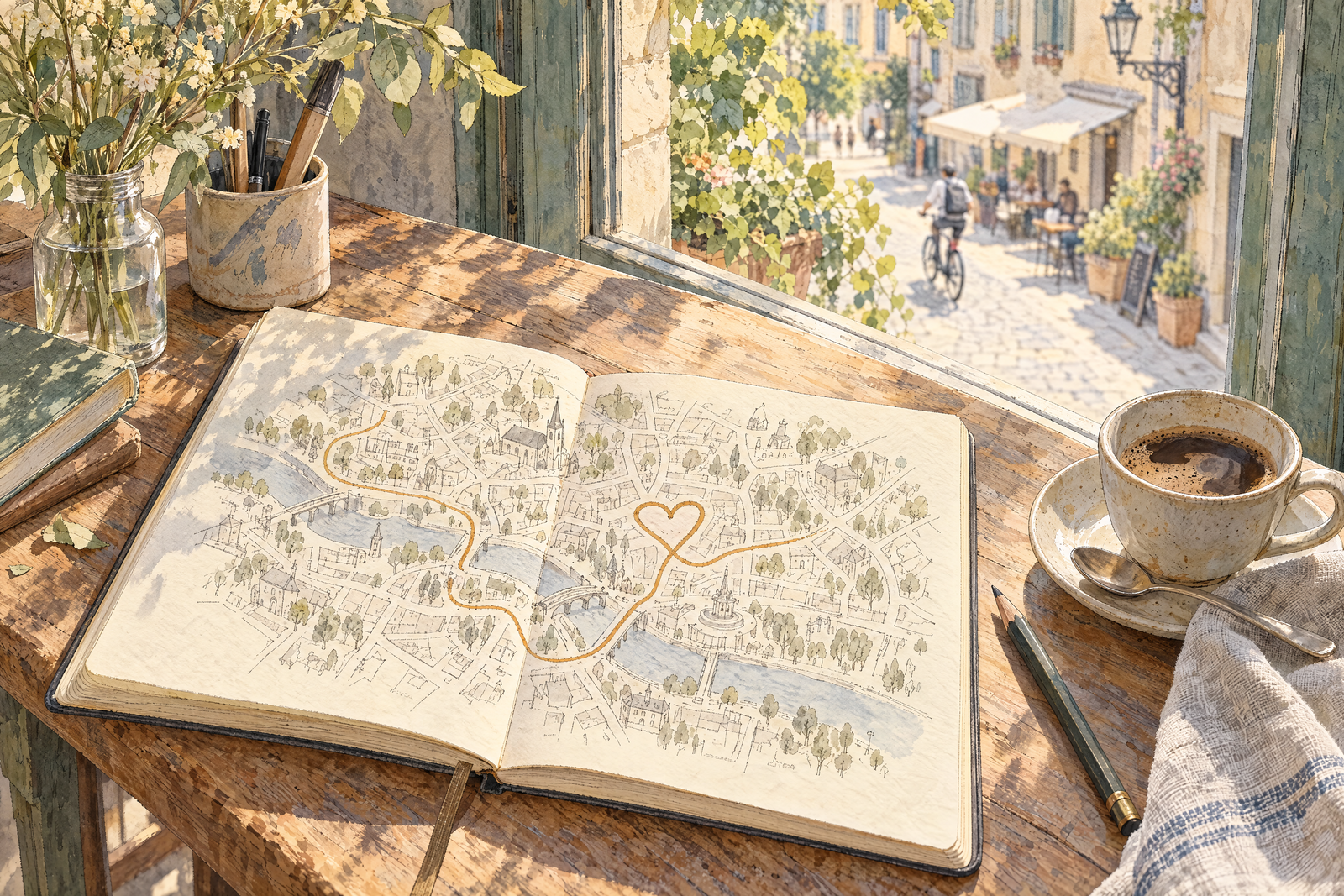
A cycling computer can turn a pleasant afternoon into a small performance review. Average speed, climbing, a personal best narrowly missed. Brompton and Shokz’s latest challenge offers another possible result: a ride that looks like a heart.
Their UK GPS-art competition opened on 28 October. It asks riders to turn a recorded journey into a drawing, with a minimum distance of 15.51 km. The oddly precise number combines the brands’ stated 15th and 51st anniversaries. That is quite a lot of birthday arithmetic to put into a bike ride, but the creative brief is rather appealing.
A different sort of finish line
According to the official terms, the main challenge runs until 15 November 2026, with a route screenshot submitted by 23:59:59 GMT that day. Entry is free, no purchase is required, and eligibility is restricted to UK residents aged 18 or over. This is a UK event, rather than a worldwide Brompton competition.
The judging considers the originality of the shape, its connection to the theme, how completely it was ridden and its visual impact. There is no fixed course. Letters, landmarks and symbols are among the organisers’ suggestions.
Those criteria make for a pleasing change of emphasis. A rider with an excellent pair of legs can still produce a fairly unconvincing duck. Someone who spends an evening spotting a beak in the local street plan might have the more memorable result.
The town gets a second job
GPS art turns the recorded line of an activity into an image. Shokz’s September introduction describes the central puzzle: the intended drawing has to fit roads and paths that can actually be ridden. It also makes clear that Strava itself is optional; other GPS recording tools can produce the track.
That constraint gives the idea its charm. A street grid supplies corners, a curved road offers part of a face, and a detour becomes either an artistic breakthrough or a very unfortunate nose. The route planner starts to resemble a sketchbook with an unusually argumentative pencil.
There is an appealing reversal here. Usually the map helps a cyclist reach something: work, a café, the coast. In GPS art, the map becomes the thing being made. Familiar streets acquire a second purpose, and an otherwise unremarkable turning can suddenly matter a great deal.
Bigger than one brand challenge
The form already has a busy life beyond this campaign. The strav.art gallery organises work into categories ranging from dinosaurs and food to transport and words. It accepts activities beyond cycling, too. This is a shared creative practice, rather than something Brompton and Shokz have just invented.
The gallery has commercial offers and paid options, so its collection is inspiration rather than a participation census.
The more interesting question is what this kind of challenge rewards. A fast loop can be repeated almost anywhere. A recognisable drawing grows out of the particular streets available, including their awkward gaps. Local knowledge becomes part of the equipment.
A folding bike fits that playful spirit rather well, although a hinge has no special power to improve a GPS drawing. The attraction is the modest scale of the adventure: a reason to look again at a town, without requiring a new bicycle or a heroic expedition.
The picture is only half the ride
There is one obvious limit to the game: a neat line on a screen does not make a road suitable or accessible for cycling. An imperfect shape is a better souvenir than a route forced through somewhere it does not belong.
Beyond that, the idea leaves plenty of room for silliness. A recognisable cat would be a triumph. A collection of angular streets that only its creator recognises as a cat might be an even better conversation afterwards.
The campaign is brand marketing, of course. Its worthwhile contribution is a brief that makes room for imagination. For once, the most interesting thing on the activity screen might be neither the distance nor the speed, but the slightly bewildered animal drawn between them.