
32-inch wheels just got harder to dismiss
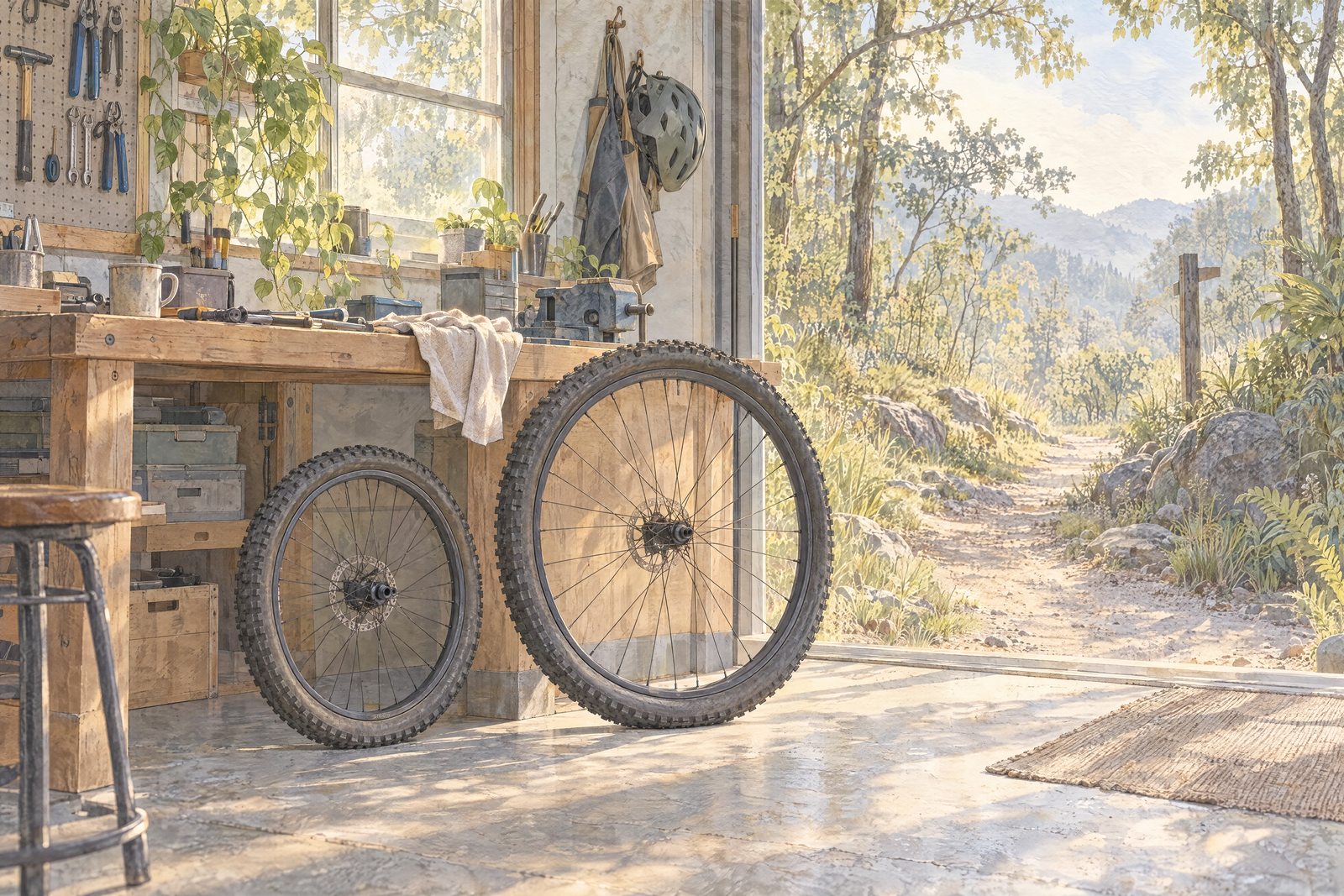
A 32-inch mountain-bike wheel is quite a sight from the small-wheel end of cycling. This month, though, the attraction has moved beyond a striking show-bike photograph: a growing selection of parts is giving the enormous wheel a more practical future.
Reserve announced a 32-inch version of its 30|XC wheelset on 20 October. Earlier in the month, Revel opened reservations for a titanium frame built around the size, while Continental previewed a matching tyre for next spring. There is still plenty of waiting involved. There is also rather more engineering to look at.
Reserve brings the wheels
In its 20 October announcement, published as a manufacturer press release, Reserve introduced the larger 30|XC as a complete wheelset or a separate rim. Its stated territory is cross-country racing and trail riding.
The wheelset’s launch price was US$1,799, with a claimed 1,911 g weight including rim tape, Fillmore valves and an XD driver body. The internal rim width is 30 mm, and each wheel uses 28 spokes. Those details describe a fairly substantial piece of equipment, rather than a giant wheel made merely to attract a crowd.
More revealing is Reserve’s explanation of the rim. The company says it reinforced the construction and changed the profile to pursue the stiffness and ride feel of the 29-inch version. Increasing the diameter gave the designers more to do than adjusting the number on the box.
Reserve’s current specification page lists separate rim profiles for the two sizes. That is the useful detail here: the larger format is being treated as its own design problem.
Revel supplies a frame, with a calendar attached
Revel’s 7 October El Jefe Grande announcement moves the conversation beyond loose components. The titanium hardtail developed from the company’s earlier Concept Labs prototypes, with reworked geometry for the bigger wheels.
The production specification also makes an interesting concession to rider size. Small frames use a 32-inch front wheel and a 29-inch rear; medium through extra-large use 32 inches at both ends. Even within one model, the biggest possible wheel isn’t automatically the answer everywhere.
It is a frame-only reservation, rather than a complete bicycle waiting to be wheeled out of a shop. The announcement gave December as the shipping target. Revel’s current UK reservation page still describes a limited first run expected before the end of 2026, with complete bikes unavailable.
That leaves the tempting custom-build project and the actual delivered bicycle as two different stages. For an enthusiast, assembling an unusual machine can be part of the fun. It also puts rather more responsibility on the growing parts selection.
Continental’s contribution arrives later
Tyres are the other part of this developing picture. Continental’s press release published on 16 October previewed a 32-inch Dubnital using its Race casing and Rapid compound, aimed at cross-country and gravel riding.
The important date is April 2027, when Continental says it will become available globally. An October announcement and an April tyre are quite capable of existing in the same news story; they are less helpful if mistaken for the same shopping opportunity.
Continental presents better obstacle rollover and momentum retention among the attractions. Reserve makes similar arguments for the larger wheels. These are manufacturer performance claims. Bromptom hasn’t tested these products, and a launch announcement cannot settle how a complete bike will feel or perform on a particular trail.
The interesting bit is the supporting cast
A spectacular prototype can survive as a splendid one-off. A wheel size intended for ordinary ownership needs a less glamorous supporting cast: frames, forks, rims, tyres and replacements when something wears out.
The October announcements make that supporting cast easier to see. They also reveal a staggered timetable. Reserve announced its wheels as available at launch; Revel is taking frame reservations; Continental’s new tyre remains a future release. Current stock will depend on the particular product and market. There is no single moment when the whole idea becomes ready for everybody.
That is why the news is worth following from a small-wheel corner of cycling. Folding-bike enthusiasts already know that the diameter is only one part of a bicycle’s character. The cleverness is in arranging the rest of the machine around it.
With 32 inches, that arrangement is now producing specific choices: a revised rim profile, different wheel pairings across frame sizes, and a tyre company committing to a launch date. Those details are more interesting than a blanket promise that bigger means better.
The next chapter belongs to delivered bikes, familiar trails and testers with something useful to compare. There should be plenty to argue about. At least the wheels will be easy to spot.